Intro
In the full decade since The Force Awakens release, the entertainment landscape and Star Wars discourse changed immensely. What was once a franchise defined primarily by theatrical films has expanded into streaming series, animation, and an ongoing transmedia universe that now dominates much of Disney’s output.
Even so, it cannot be denied that the impact of The Force Awakens and the films that followed reshaped the trajectory of the franchise, for better and worse. Its success reignited global enthusiasm for Star Wars, but the creative decisions made in its aftermath continue to define how the sequel era is viewed today.
This retrospective examines The Force Awakens ten years later, breaking down what it got right, where it went wrong, and what lessons its legacy leaves behind both as a standalone film and as the foundation of a new era of Star Wars.
Con: Weak World-Building and Prequel Spite
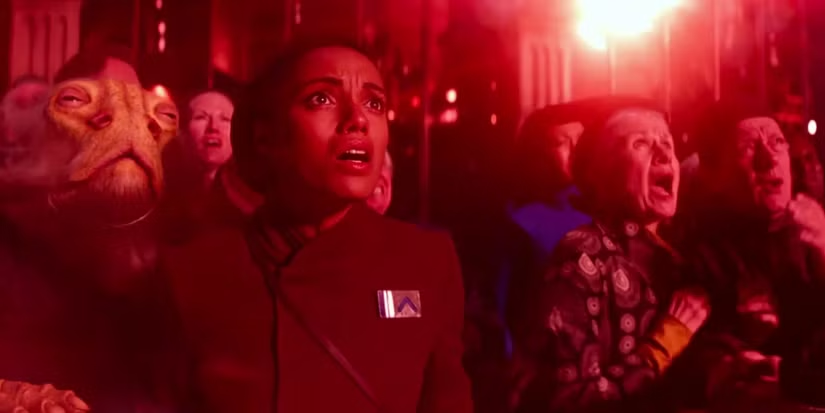
One of the most important responsibilities of a sequel, especially one released decades after the original trilogy is to meaningfully address what the galaxy and its heroes have been through in the years since. The Force Awakens largely avoids doing this, and the result is a setting that feels thin and underdeveloped.
The film offers little clarity on the state of the galaxy. The New Republic is mentioned but barely defined, the First Order appears fully formed with minimal explanation, and the Resistance’s existence raises obvious questions. If the Republic is in power, why does a separate Resistance need to exist at all? These are foundational details that the film simply glosses over.
Supplementary material like the Aftermath novels or tie-in comics does not solve this issue. A film should be able to stand on its own, and relying on external media to explain basic world-building is not a substitute for clear storytelling within the movie itself.
Any chance the sequel trilogy had to establish a new status quo is effectively erased when the First Order destroys the New Republic’s capital (conspicuously not Coruscant) without giving the audience any reason to care about what was lost. The moment is framed as galaxy-shaking, yet it lacks emotional weight because the film never invests in the Republic or its institutions beforehand.
I believe the reason J.J. Abrams decided to go this route was to distance itself from the prequels. It’s understandable that Lucas received a lot of backlash for exploring the internal politics in the galaxy, but destroying this element altogether just to bring the franchise back to the underdog rebels versus the evil empire in the laziest way possible
More frustrating is the missed opportunity this represents. We could have seen Luke Skywalker leading a new Jedi Order, or Leia Organa struggling to guide a fragile New Republic through political instability. Instead, the film resets the galaxy to Rebels versus Empire, undoing the victories of the original trilogy in favour of familiar imagery.
Compared to the political and institutional clarity of earlier Star Wars eras, The Force Awakens leaves its galaxy feeling small, vague, and stagnant. In trying to distance itself from the prequels, it overcorrects—stripping away depth rather than building upon it.
Pro: Strong, Immediately Engaging Characters
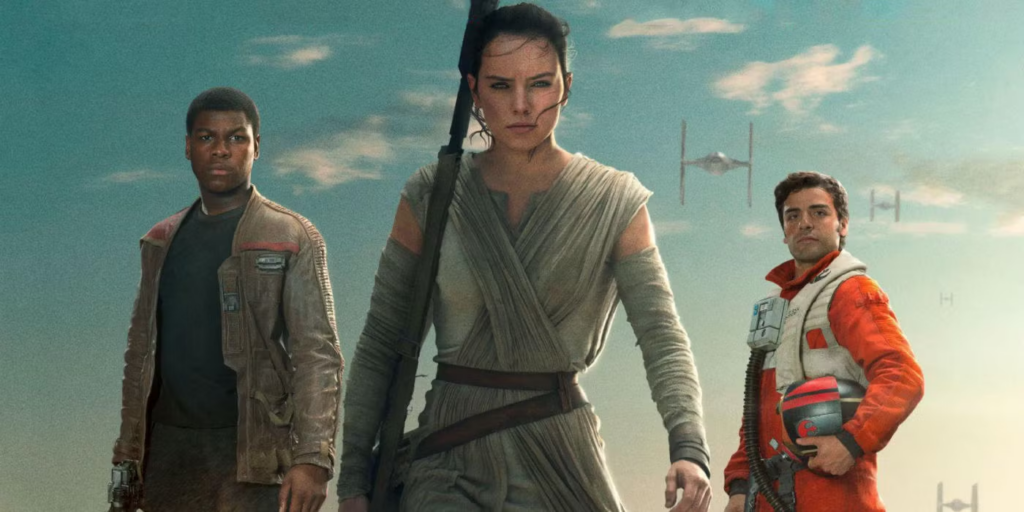
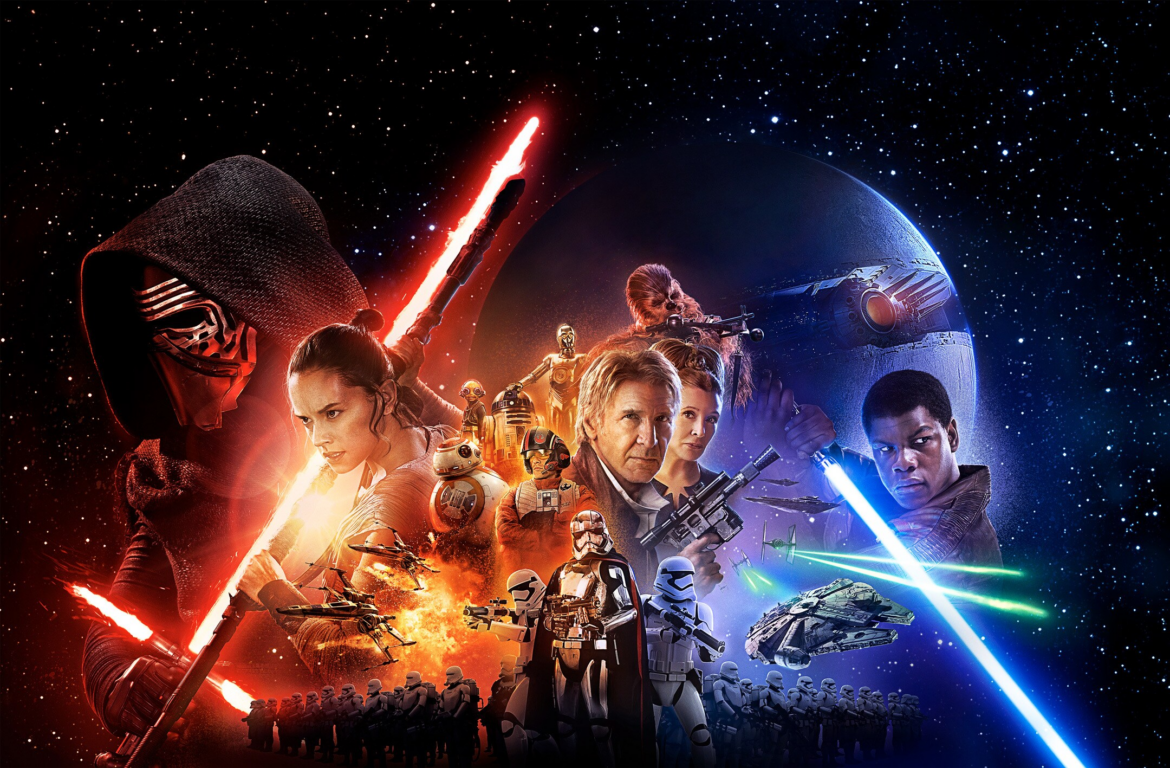
One of the most important elements of any story is its characters, and The Force Awakens largely succeeds in this area. Its new leads have the right mix of charisma, vulnerability, and screen presence to carry the film, even when the larger story falters.
Finn remains one of the film’s most interesting ideas. A stormtrooper disillusioned by the First Order who chooses to defect is something Star Wars had never explored onscreen before. His arc—from running from danger to finally standing up to it—is subtle but genuine. Finn’s willingness to face a Force user to protect his friend speaks volumes about his growth, making it all the more frustrating that this development is largely abandoned in later films.
Rey has proven to be the most controversial character of the sequel era. Criticism surrounding her rapid mastery of the Force and her defeat of Kylo Ren without formal training is understandable, especially when compared to Luke and Anakin, whose abilities developed over time through struggle and mentorship. These concerns highlight why internal logic and earned progression matter in storytelling.
That said, Rey still works as a character within The Force Awakens. She is defined by loneliness and longing, clinging to the hope that staying on Jakku will bring her family back. What ultimately grounds Rey is Daisy Ridley’s performance. Despite limited material, Ridley injects warmth, uncertainty, and emotional nuance that make Rey feel human—something many modern genre protagonists lack. Unlike recent “strong” female leads who rely on stoicism to project strength, Ridley allows vulnerability to coexist with resilience, preventing Rey from feeling flat or detached.
Kylo Ren, meanwhile, is arguably the strongest character to emerge from the sequel trilogy. The concept of a would-be Darth Vader who is unstable, insecure, and deeply conflicted is compelling. His most effective moments come when the mask comes off, revealing how quickly the intimidating façade crumbles. Adam Driver’s performance gives Kylo a volatility and emotional rawness rarely seen in Star Wars villains.
The legacy characters are also handled with care. While the missed opportunity to reunite Luke, Leia, and Han onscreen remains disappointing, their individual appearances feel purposeful rather than intrusive. Han Solo, in particular, benefits from the most screen time, and Harrison Ford slips back into the role effortlessly, delivering a performance that feels true to the character without overshadowing the new cast.
This is The Force Awakens’ biggest strength. Rey, Finn, and Kylo Ren are compelling from the outset; their introductions are efficient without feeling rushed, and their performances carry genuine emotional weight. Even ten years later, these characters still hold up—and they remain the film’s most enduring achievement.
Pro: A Return to Practical, Lived-In Star Wars
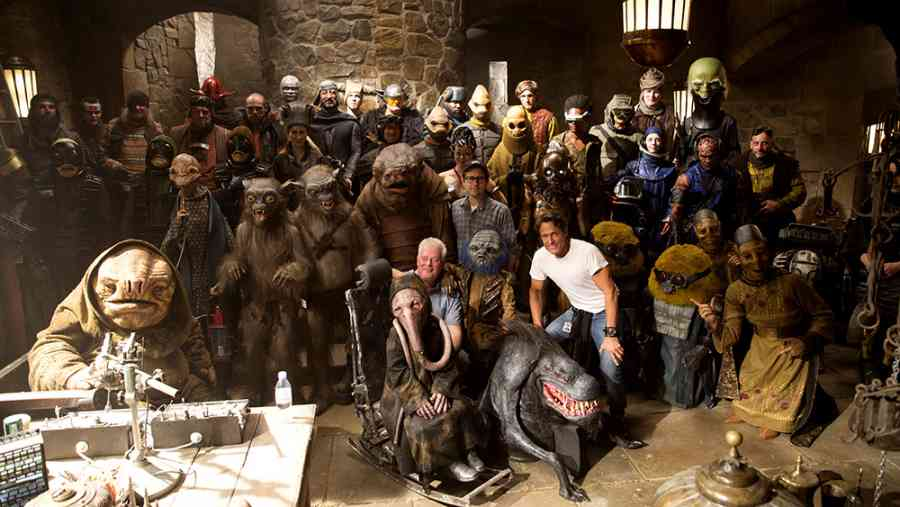
One of the most persistent criticisms of the prequel trilogy was its heavy reliance on CGI, particularly for environments and alien characters. At the time, much of that digital work felt artificial and overly clean, giving parts of the galaxy a cartoon-like quality. While visual effects technology has improved significantly since then, The Force Awakens made a conscious effort to rebalance the equation.
Many locations, creatures, and costumes were built practically, using physical sets, makeup, and animatronics wherever possible. This approach gives the film a tangible weight that had been missing from Star Wars for years. Even a decade later, these elements hold up remarkably well.
The balance between practical effects and CGI helps ground the film visually. Sets feel tactile, costumes look worn and functional, and the galaxy once again feels lived in rather than digitally assembled. It’s the closest the franchise had come to recapturing the aesthetic of the original trilogy, and it played a significant role in rebuilding audience trust after years of visual excess.
That said, the film’s desire to distance itself from the prequels extends beyond aesthetics—sometimes to its detriment. In focusing so heavily on recapturing the look and feel of the past, The Force Awakens occasionally prioritises familiarity over meaningful evolution, a tension that would resurface in more problematic ways later on
Con: The Soft Reboot Problem
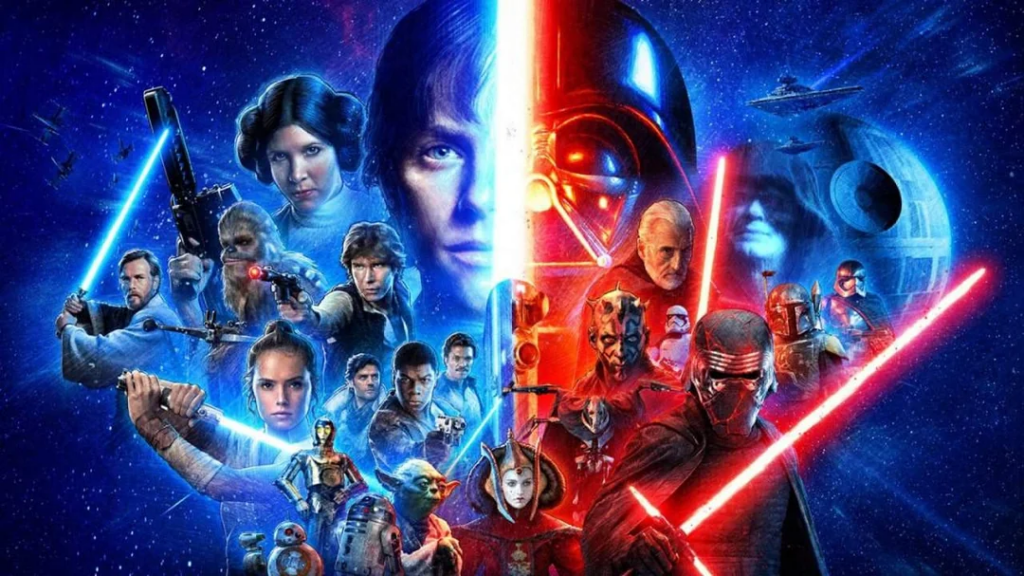
Despite its strengths in character and visual design, The Force Awakens ultimately functions less as a sequel and more as a soft reboot. Its core story beats closely mirror A New Hope: a secret hidden inside a droid, a Force-sensitive protagonist from a desert planet, an elderly mentor figure, and a planet-destroying superweapon threatening the galaxy. The parallels are impossible to ignore.
At the time of release, most audiences recognized this—and largely gave it a pass. It had been over fifteen years since a live-action Star Wars film had last arrived in theaters, and the franchise still carried the weight of a true cinematic event. In 2015, Star Wars had not yet become the constant content machine it is today.
The mere fact that a new Star Wars film existed again was enough to override deeper scrutiny. The excitement of returning to that galaxy, combined with the absence of oversaturation and the novelty of Disney’s first entry, created a wave of goodwill that softened criticism of the film’s familiarity.
In hindsight, however, that creative safety net proved limiting. By leaning so heavily on the structure of A New Hope, The Force Awakens avoided taking meaningful narrative risks, setting the sequel trilogy on a path defined more by nostalgia than progression.
Biggest Con: All Set-Up, No Payoff
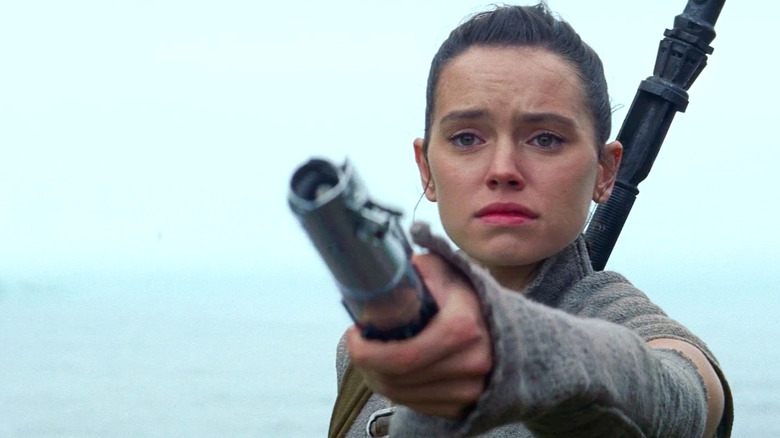
Ultimately, the biggest flaw of The Force Awakens is how much it sets up without any clear plan for resolution. The film leaves behind a trail of unanswered questions—Rey’s origins, Snoke’s identity, Luke’s self-imposed exile, and the Knights of Ren—all designed to spark intrigue and discussion.
At the time, these mysteries worked. They fueled speculation, debate, and excitement about where the story might go next. But without a unified long-term vision, those setups collapsed under the weight of inconsistent follow-through. Ten years later, many of these moments feel hollow, either resolved in unsatisfying ways or rendered meaningless altogether.
Scenes that once felt loaded with promise now exist primarily as reminders of lost potential. Rather than serving as foundations for a cohesive trilogy, they highlight the absence of narrative direction behind the scenes.
In hindsight, The Force Awakens stands as an example not of unrealized hope, but of hope squandered—where storytelling was treated less as a carefully planned creative endeavor and more as a flexible product shaped by shifting studio priorities.
Conclusion
To this day, my feelings on The Force Awakens remain complicated. On its own, it qualifies as a good film on a surface level—well-paced, well-acted, and undeniably entertaining. But the deeper you look, the more the cracks begin to show.
It provided a strong and confident start to a new era of the franchise, restoring goodwill and excitement after years of uncertainty. Unfortunately, that goodwill was ultimately squandered by The Last Jedi and especially The Rise of Skywalker, which failed to meaningfully pay off the foundations laid here.
In many ways, The Force Awakens stands as both a successful revival and a cautionary tale: proof that relaunching Star Wars requires more than spectacle and nostalgia—it requires vision, planning, and commitment to long-term storytelling.